Built environment matters
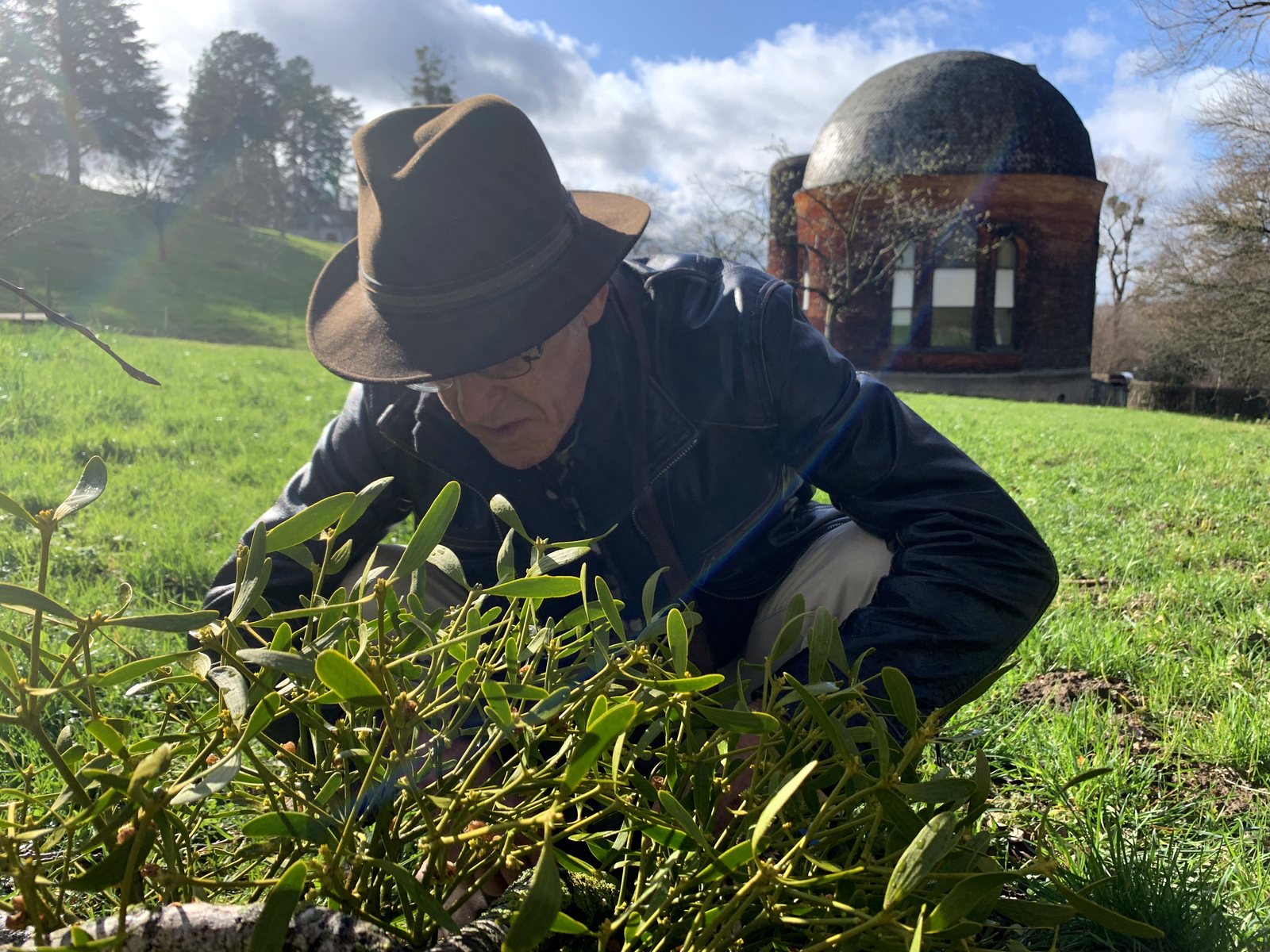
Dr. Goldberg’s postdoctoral studies took place in the buildings of the Rudolf Steiner estate outside Basel, Switzerland. He studied under the dome of the Earth Sciences building, which felt like a temple, and researched inside the Ita Wegman center, where the expansiveness of nature in the room grounded the work. The Klinik Arlesheim integrated art and light with vistas into the mountains and forest. Dana Smirin had often toured old hospitals and sanatoriums in Europe and Scandinavia: sunlight and nature maximized, privacy and communion spaces combined artfully, mixed mediums of color, texture, ceramics, tile, plants, movement, and space, whether modern or old. Medicinal and food gardens often abutted calm stations in nature, with wheelchair accessibility. These combined experiences surfaced in a renovation and new build that embrace nature into the room.
A crossroads in medicine
For decades, Dr. Raoul Goldberg practiced at the meeting point of conventional and anthroposophic medicine, grounded in a conviction that body and mind are one living reality. Yet he kept arriving at the same threshold. With the most complex, chronic illnesses, the body alone would not yield its reasons, and he was certain the roots ran deeper, into biography, into the psyche, into the parts of a person ordinary medicine is not trained to reach. He had the framework to believe it. He did not yet have the tools to work with it.
Learning to see the psyche
That search led him to psychophonetics, a therapeutic approach drawn from Rudolf Steiner’s writing on body, soul, and spirit, and from a deep background in speech and drama. Dr. Goldberg had been a child actor and had already spent decades studying Steiner, and his mentors and teachers in Switzerland were Steiner’s pupils, so immersing himself in this four-year training was seamless. He first applied it for his own healing, and then began applying it in his practice, which became a living laboratory with hundreds of patients.
Participatory awareness
Over those years, something of his own began to emerge. Before any process could begin, for himself or for a patient, there was ground to prepare: an intention, an attention, an ethic, a way of getting oneself out of the way and opening the heart and the will. These ‘preparing the ground’ steps were new, and they gathered, over time, into a method of his own. He called it participatory awareness.
The phrase holds the whole of it. To be merely aware of a feeling, grief, shame, an old wound, changes nothing. Awareness becomes transformative only when you participate in it: step out, witness yourself with compassion, and bring a resource to the part that is hurting. The awareness is the diagnosis; the participation is the therapy. That movement, from seeing to engaging, is the heart of how PATH Method works.
“If I am simply aware, nothing changes. Awareness alone is not enough. It becomes transformative only when you engage, when you do something.” Dr. Raoul Goldberg
Dana, and the deepening
In 2011, Dana Smirin came into the work, first through her own healing, then as its closest collaborator. Over long stretches of deep work together, PATH Method was tested, refined, and lived. Dana brought the skills that would reshape and modernize the practice, and together they began to teach, along South Africa’s Garden Route, in Johannesburg, and for many years at Esalen in California. She remains co-founder of Path to Health Center and of PATH Method.
The name: PATH
For years the work was simply called participatory awareness. When it came time to build a website, it needed a name that could carry four ideas at once, participation, awareness, transformation, and healing. A wordsmith in India took them away and returned with one word: PATH, Participatory Awareness for Transformational Healing. It has held ever since.
A home for the work
PATH Method needed a home, a place worthy of it, one that could not only give birth to the work but hold and nurture it. Dr. Goldberg turned to an architect versed in Steiner’s architecture and in projective geometry, and asked for a building shaped by the same threefold structure as the training itself: body, soul, and spirit, I, you, and we.
The architect drew three interposing circles. Where they meet in the center, a heart appears. That heart became the shape of the building, and it settled into the proportions of the land as though it had always been meant to be there. It is also, today, the shape at the center of the Center’s emblem.
The name came last, and most simply of all. The building sat apart from the road, and the paths to it had to be made by hand, one for wheelchair access, one leading down to the food garden, one going into the heart of the Center. Three paths, built into the earth. And with them, the name arrived on its own: Path to Health.
The three-circle heart lives on in the Center’s emblem, and the PATH Method it was built to hold is practiced here still.